Facts of the Bodyboarding World Tour.
The continent of Africa is yet to host a major international event, 2020 was meant to see South Africa part of the calendar but due to the pandemic Covid 19, the event and the entire World Tour was cancelled. Geographically, Reunion island, which is an overseas department of France; is the only region of the African continent to have host a world tour event and Guiherme Tâmega is currently the most successful male athlete with 3 world tour event wins (1996, 1997, 1998). Daniela Freitas on the other side is the most successful female athlete in Reunion Island with 2 world tour event wins.

Pierre-Louis Costes and Uri Valadão are the most successful male athletes in Europe (France, Portugal, Spain) with 5 world tour event wins each. PLC won 4 events in Portugal and 1 event in the Canary islands including 2 Sintra Pro titles, 1 win at Nazare, 1 win in the Açores and 1 win at the Fronton Pro. Uri Valadão won a record of 3 Sintra Pro titles in Portugal, 1 win in the Basque Country and 1 win at the Confital Pro (Canary Islands).
On the ladies side, Neymara Carvalho is the most successful athlete in Europe with 8 world tour event wins including a record or 6 Sintra Pro titles, 1 win in Peniche and 1 win at the Confital Pro.

Guilherme Tâmega is the most successful male athlete in South America with 6 world tour event wins including 2 Arica Chilean Challenge titles and 4 wins in Brazil. Pierre Costes is in second place with 5 wins in South America including 2 Arica Chilean Challenge titles, 1 win in Antofagasta, 1 win in Brazil and 1 win in Peru.
Isabela Sousa is the most successful female athlete in South America with a total of 8 world tour event wins including 4 wins in Brazil, 3 wins in Venezuela and 1 win in Chile.

Mike Stewart is the most successful male athlete in the North America region ( United States, Hawaii, Mexico, Puerto Rico, Guadeloupe) winning 12 events in Hawaii. Mike won 12 world tour events including 11 Pipeline titles and 1 win at the Ledges Pro in Maui. Jeff Hubbard is very close to beat Mike’s record with 10 world tour event wins in the North America region including 5 Pipeline titles, 2 wins in Puerto Rico, 2 wins in Mexico and 1 win at the Sandy Beach Pro.
On the ladies side, Stephanie Pettersen is the most successful female athlete in the North American region with 6 Pipeline titles under her belt.

APB asked the fans if the final day of the 2011 Zicatela Pro in Puerto Escondido was the greatest day of bodyboarding history? The name of the event in Mexico in 2011 was one of the most mentioned in the comments box ever. The final day of the Zicatela Pro had all the ingredients to make it an incredible day, the quarters final heats were as exciting as it gets, the waves were absolutely massive reaching 15ft on the biggest sets resulting of athletes needing jet skis assistance to reach the line up, the level and commitment displayed was phenomenal and, of course, may be the main reason of the event’s success was the fact it was broadcasted on internet as it was one of the stops of the first ever tour covered with satellite livestream. Hawaiian Jeff Hubbard won the event defeating Australian Ryan Hardy in the final, Frenchman Pierre-Louis Costes in the semi’s and his brother Dave in the quarters.

Ben Player never won the same world tour event only once as he managed to win Pipeline, Arica and Shark Island twice. Ben’s first win on the world tour was in 2007 for the Shark Island Challenge and went back to back in 2008. Ben also won Pipeline back to back in 2013 and 2014. His first win at Arica was in 2007 and won again the event in 2013.

Incredible statistic about Guilherme Tâmega. Since the introduction of the World Tour in 1995, Guilherme finished inside the top 10 every single year he participated. If Mike Stewart is the definition of longevity , then it is fair to say Guilherme is the definition of consistency.
GT holds a phenomenal record of 18 years inside the top 10 including 12 consecutive years from 1995 to 2006 before taking a year off in 2007. Guilherme joined the tour again in 2008 to retire professionally in 2014.
Pierre-Louis Costes managed to beat Guilherme’s record of most consecutive years inside the top 10 last year with 2019 representing his 13th year inside the top 10 (2007-2019). He needs to add another 6 years inside the top 10 to beat Guilherme Tâmega’s record of most years inside the top 10.

Guilherme Tamega holds the record for most world tour wins in different countries with victories across 9 different nations. Guilherme won in 9 countries out of 14 countries host of a world tour event and the only country he never competed was in Venezuela, so GT has a 9 out of 13 ratio. He won in France (Including overseas departments and territories), Spain, Portugal, Chile, Brazil, United States of America, Japan, Indonesia and Australia, but never won in the Philippines, Mexico, Peru or Puerto Rico.
Jeff Hubbard and PLC share second place with world tour wins in 8 different countries. Jeff Hubbard never participated in the Philippines, but won in 8 of the 13 countries he entered. Jeff won in France (Including overseas departments and territories), Portugal, Peru, Chile, USA, Puerto Rico, Mexico and Australia, but never won in Brazil, Venezuela, Spain or Japan.
Pierre never participated in the Philippines, Japan, Indonesia or Venezuela, but won in 8 out of the 10 countries he competed. PLC won in Spain, Portugal, Chile, Brazil, Peru, Puerto Rico, United States and Australia, but never won in France or Mexico.
The countries of France (Including overseas departments and territories) and Spain (Including Canaries and the Basque Country) are the only nations to have won at least a world tour event in each division (Men’s, Women’s, Dropknee, Junior’s).
In all divisions combined, Brazil has won 139 world tour events and produced 29 individual winners. United States is in second place with 65 world tour wins and 10 individual winners (Dave Hubbard, Tanner McDaniel and Sammy Morettino won in two divisions).
Australia won a total of 63 world tour events and sits in third place producing a total of 23 individual wins (Ben Holland, Damian King and Dave Winchester won in two divisions).
France is currently in fourth with 30 world tour event wins producing 6 individual winners (Amaury Lavernhe won in two divisions). South Africa is just behind France with 28 event wins for a total of 7 individual winners (Tristan Roberts won in two divisions). Spain has won 25 world tour events and produced 12 individual athletes, which is more than the USA, France or South Africa.Japan won 11 events for 2 individual winners. Portugal and Chile won 5 world tour events, but Portugal has 4 individual winners meanwhile Chile has only 3. Peru won 4 events and produced one individual winner. Puerto Rico won 3 events but produced 3 individual winners. Morocco and Venezuela has 3 world tour events wins and 2 individual winners each.

The Pro Junior division was only introduced in 2014 and Brazil managed to win 5 world tour events until today producing 4 individual winners.

The United States has dominated the Dropknee division with an incredible record of 25 world tour event wins producing 4 individual winners, all from the islands of Hawaii.

In the women’s division, the dominance of Brazil Is phenomenal with an incredible record of 92 world tour event wins between 13 individual winners. To put this record in perspective, the Brazilians womens won more events than Brazil and USA combined in the men’s division.They basically won around 70% of all the events in the women’s division. In second place, Spain won 12 world tour events and produced 3 individual winners. Japan won 11 events and is in third.
In the men’s division, Brazil is currently the nation with most world tour event wins managing to win a record of 48 victories between 12 athletes taking in consideration Guilherme Tâmega won half of all the events under the Brazilian flag. In second place, Australia won a total of 42 world tour event wins but has produced more individual winners than any other nations with a total of 16 athletes. Sitting in third, United States won a total of 36 events.

All divisions combined, Brazil has won 33 world titles producing 13 individual world champions. In second place, the United States managed to win 26 world titles and produced 7 individual world champions all representing the islands of Hawaii. Australia is sitting in third place with 9 world titles and 5 individuals world champions (Damian King won in two divisions). South Africa is currently sitting in fourth with 8 world titles and 5 individuals world champions (Tristan Roberts won in two divisions). In fifth place, France has won 6 world titles and produced 4 individuals world champions. Spain is sitting in sixth with 5 world titles for a total of 4 individuals world champions. Japan sits at the seventh place with two world titles for the same amount of individual world champions. Portugal, Peru and Chile are tied with one world title and individual world champion each.
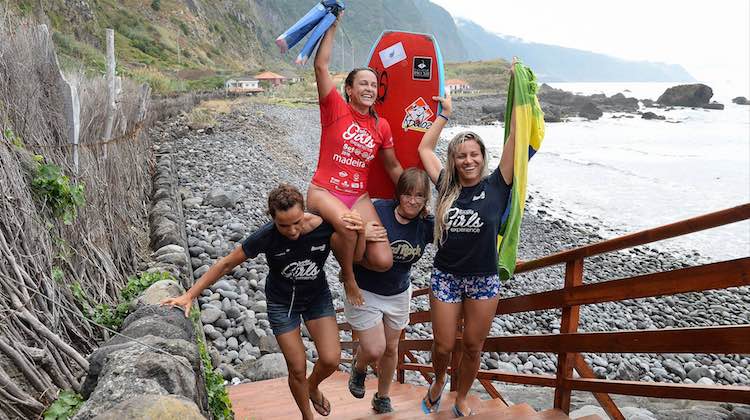
In the women’s division, Brazil has clearly dominated the sport of bodyboarding with an incredible record of 23 world titles won in between Stephanie Pettersen, Glenda Kozlowski, Cláudia Ferrari, Karla Costa, Neymara Carvalho, Isabela Sousa, Soraia Rocha, Mariana Nogueira and Daniela Freitas. In second place, Spain has won 4 world titles in front of Japan (2), Portugal (1) and Australia (1). Brazil has produced a record of 9 individual world champions just ahead of Spain (3), Japan (2), Portugal (1) and Australia (1).
In the men’s category, USA won the most world titles with 14 world titles won by hawaiians Mike Stewart (9), Jeff Hubbard (3), Daniel Kaimi (1) and Ben Severson (1). Brazil is the second country with most men’s world titles (8) just ahead of Australia/South Africa (6 each) and France (4). However, South Africa and United States are the countries with most individual world champions (4) just ahead of Brazil/Australia (3) and France (2).

Australia is the nation who has produced the most world tour event winners in the men’s division with 16 different athletes just ahead of Brazil (12) and USA (8). Ben Holland holds the record for most career event wins from an Australian.
List of the men’s world tour winners athletes from Australia:
- Ben Holland (8 wins)
- Ben Player (6 wins)
- Damian King, Dave Winchester (5 wins)
- Ryan Hardy (3 wins)
- Mitch Rawlins, Michael Eppelstun,Sean Virtue, Steve McKenzie (2 wins)
- Sam Bennett, Jake Stone, Jason Hazle, Andrew Lester, Beau Day, Jason Finlay, Lewy Finnegan (1 win)

Brazilian Daniela Freitas holds the record of most world tour wins in the same calendar year all divisions combined. In 1996, on her way to her first world title, Daniela won five events consecutively (2 in Japan, Portugal, Reunion Island and California), a record she is still holding until today. In the men’s divisions, Guilherme Tâmega won four events in 1996 (Japan, Aveiro, Reunion Island and Australia) and Jeff Hubbard won also four events in 2012 ( Pipeline, Zicatela, Port Macquarie and Puerto Rico).

Last but not the least, Ryan Hardy and Mitch Rawlins are the only male athletes to have won the Box Pro and the Shark Island Challenge. Hardballs won the SIC in 2006 and 2010 and the Box in 2011. MR won the SIC in 2012 and 2016 and the Box Pro in 2012.
All facts by the gents @apb_riders